
Patient information
Important Information for Women of Childbearing Age: Medication Reviews When Starting GLP-1 Analogues Like Mounjaro
In recent months, we have seen a growing number of patients choosing to start GLP-1 analogues such as Mounjaro (tirzepatide) through private providers. These medications are often used for weight management or diabetes, and many people are accessing them independently of NHS care.
As a GP practice, our priority is your safety and wellbeing. It is important that women of childbearing age who are starting GLP-1 medications are aware of a potential interaction that could affect their contraception.
Why Is This Important?
GLP-1 analogues, including Mounjaro, can slow down the movement of food and medication through the stomach and gut. This is known as delayed gastric emptying. While this can support blood sugar control and weight loss, it also means that oral medications — including the contraceptive pill — may not be absorbed as effectively.
This may reduce the effectiveness of the contraceptive pill and increase the risk of unintended pregnancy.
What Should You Do?
If you are a woman of childbearing age and have started or are considering starting a GLP-1 analogue such as Mounjaro:
- Book a medication review with your GP or clinical pharmacist.
It is important to review any current medications, especially hormonal contraception, to ensure you are protected and safe. - Consider alternative or additional methods of contraception.
In some cases, a switch to a non-oral contraceptive method (such as the implant, injection, or coil) may be advised. - Let your healthcare provider know about any privately prescribed medications.
Even if you have accessed the medication outside of the NHS, your GP practice needs to have a full picture to provide safe and appropriate care.
Our Commitment to You
We understand that many patients are taking proactive steps to manage their health and weight. However, medications such as Mounjaro are powerful and can have wide-ranging effects. We encourage all our patients — especially women of reproductive age — to have open and honest discussions with their healthcare team to ensure that their care is coordinated and safe.
Join the Community Games – Free Local Health & Wellbeing Event

The COVID & FLU Vaccination Bus

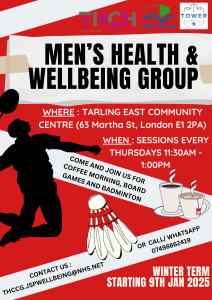
Men’s Health & Wellbeing sessions
Join Our Patient Participation Group: Help Shape the Future of Your Care!
Dear patient,
As part of our ongoing commitment to providing the best possible care for all our patients, The Jubilee Street Practice Ltd would like to invite you to join our Patient Participation Group (PPG).
What is a Patient Participation Group (PPG)?
A PPG is a group of registered patients who meet regularly with the practice team to discuss how we can improve our services and ensure that we continue to meet the needs of everyone in our community. By sharing your views and experiences, you can help shape the way healthcare is delivered at The Jubilee Street Practice Ltd. The group meets four times a year and there may be other opportunities to engage with the practice, share views and hear from us over the year.
It is important to note that a PPG is not a space to discuss individual complaints or concerns. We are always open to discuss your individual complaints and concerns through the route described on our website below:
Why should I join?
-
Have your say: This is your opportunity to influence decisions about how we operate and provide feedback on areas that could be improved.
-
Get up close and personal with our team: You will get to meet either a GP, Nurse or somebody from our wider team to get to know the staff behind our service outside of when you come in for appointments or speak with them on the phone.
-
Work together: Collaborate with other patients and staff to find solutions to the challenges facing healthcare today.
-
Stay informed: Learn about changes and developments at the practice and in the wider healthcare system.
-
Build a stronger community: By working together, we can create a practice that better supports everyone’s needs.
-
Always something in it for you: Build your confidence, skills and share ideas that can be heard and acted upon, whilst improving the service that you receive!
Our next meeting will be held on Tuesday 12th November 2024 at 13:00 – 14:30, in person at the practice. We would love to see you there and hear your valuable input.
Thank you for your contribution
At this meeting, to say thank you for attending and for your contribution – a warm and healthy spread of food will be provided. Please confirm your attendance if you would like to attend and plan to eat and talk with us.
If you would like to attend or want to learn more about the PPG, please contact us at nelondonicb.jubileestreetpractice@nhs.net by Friday 8th November. Feel free to reach out with any questions or concerns.
Thank you for considering this opportunity to make a difference. Together, we can continue to improve our practice and the care we provide.
Why am I getting this email?
You are currently on our email distribution list as patients who are interested to hear about the Patient Participation Group. To help us to update your communication preferences or to unsubscribe from this list, please follow the link below: https://forms.office.com/e/av6KmRkDDc
We look forward to hearing from you.
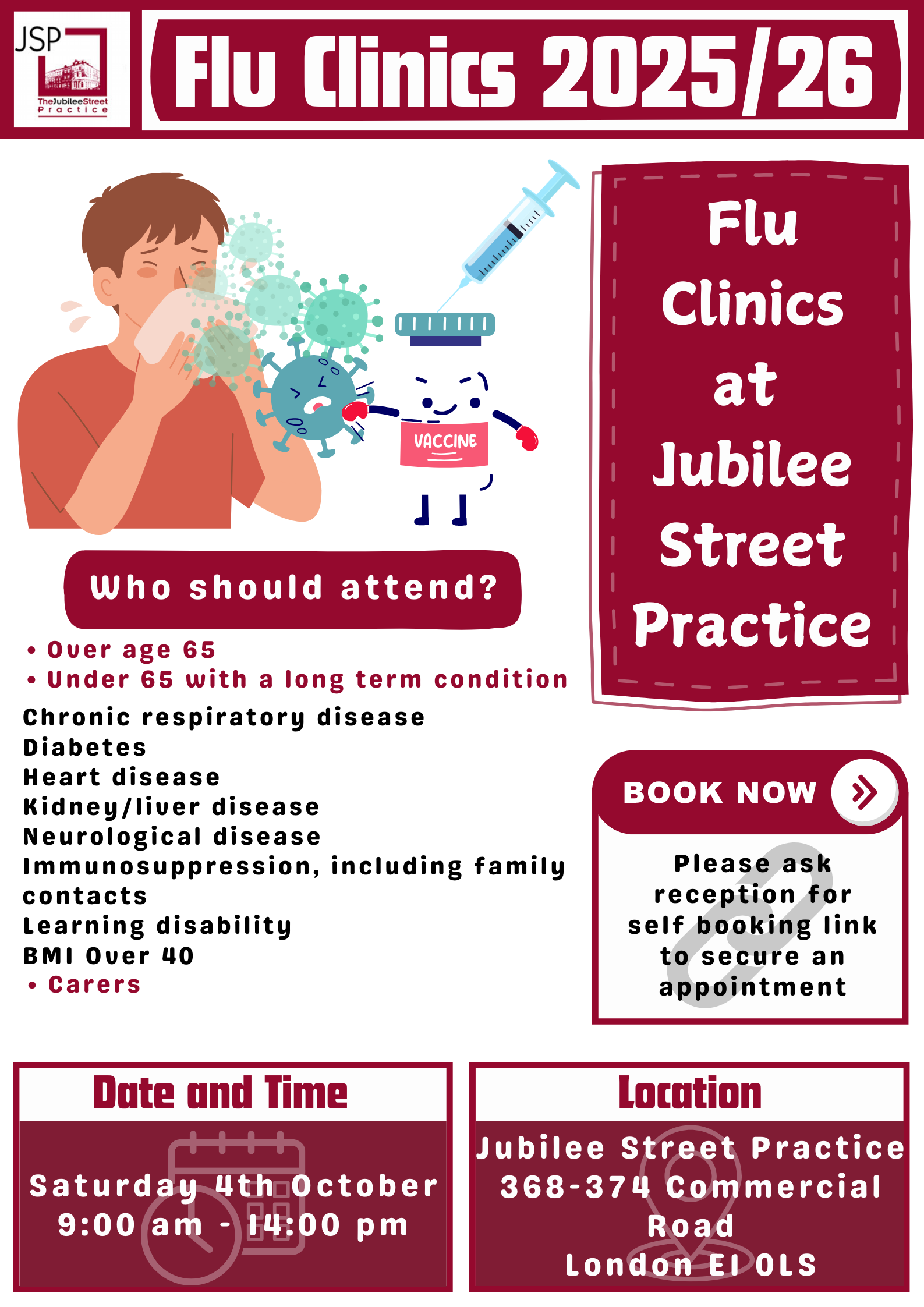
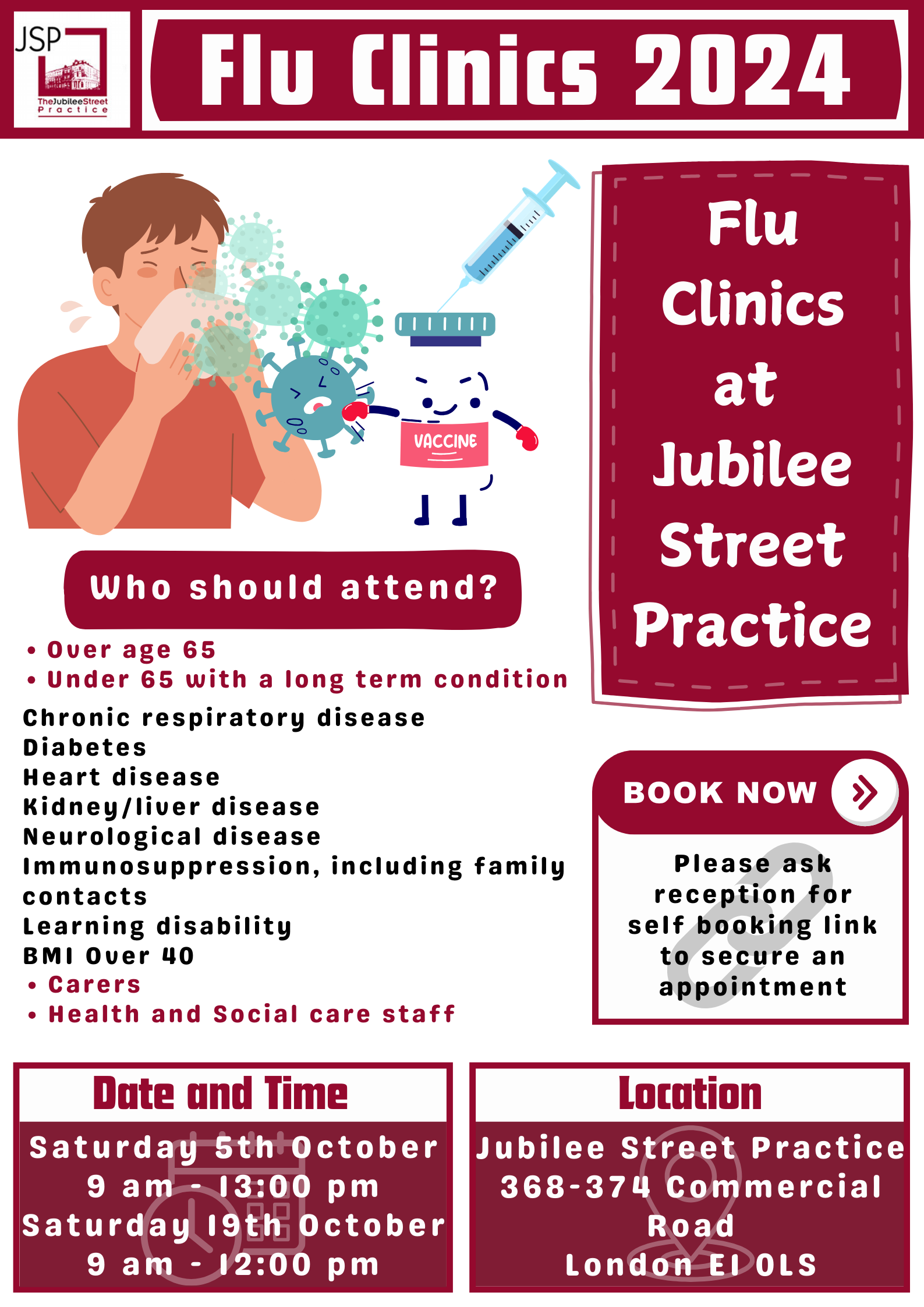
Flu Protection 2024-2025
National Pertussis Vaccination and Immunisation 2024/25
Due to the number of cases of pertussis increasing and the recent infant deaths, we are focusing on the pertussis vaccination programme for pregnant women.
Pregnant women are eligible for their pertussis vaccination from 16 weeks of pregnancy. Receiving vaccination between 20 and 32 weeks of pregnancy provides optimal protection. Vaccination may still be given after 32 weeks of pregnancy until delivery; however it may not offer as high level of passive protection to the baby.
As a practice, we are carrying out this pertussis marketing campaign with a focus on preventing illness, sharing information with pregnant women around the benefits of getting vaccinated, using all relevant opportunities to signpost to pertussis vaccination, and offering pertussis vaccination opportunistically to pregnant women registered with us.
Parent Education Classes

Diabetes management during Ramadan

Ramadan Mubarak 2024
Ramadan is soon upon us, and for those who have diabetes and wish to fast we strive to support you so that you can fulfil your fasting safely without compromising your health.
This is just a reminder that it is important to get advice in advance regarding how to manage medications during Ramadan. There is normally Ramadan teaching sessions held at Mile End Hospital, the information however will be general therefore if you have lots of medications or dosset boxes it’s best to seek personal advice from your practice.
Islam gives exemptions from fasting if you have complex medical problems that are compromised by fasting for long periods. Those that are unable to fast during Ramadan can fast during the winter months when the days are short or can donate money for charity instead of fasting (Fidya & Kaffarah).
Main problem during Ramadan is avoiding hypoglycaemia (low sugar levels) and avoiding acute kidney injury due to lack of water intake throught the day.
People with Type 1 diabetes and those with renal failure, pregnant, frail or with other medical conditions where fasting will affect them negatively are advised against fasting.
During Ramadan, medications that are normally taken at breakfast time are usually taken at Iftar and the night medications are usually taken at Sehri time. For those with lunchtime medications, it’s important to ask when to take the medication instead of assuming you can just stop taking it. Due to the short periods when one can eat and drink, some medications need reducing but not all need stopping.
All diabetes medications including insulin which are taken at Iftar should be taken during the meal or just after the meal to prevent hypo happening as one would have been fasting for over 12 hours. This is why it is extremely important to get help from one of the diabetes nurses on dosing in advance, you can do this onlinbe by submitting a request to the admin team to call you back using this link.
It is important to remember to switch back to taking your medications how you normally take them after Ramadan is over.
Hoping you fulfil your wishes for Ramadan 2024
Bonnie Mpofu (Diabetes Specialist Nurse)
Jubilee Street Practice